
I Honestly Think My Photos Are Pretty Bad
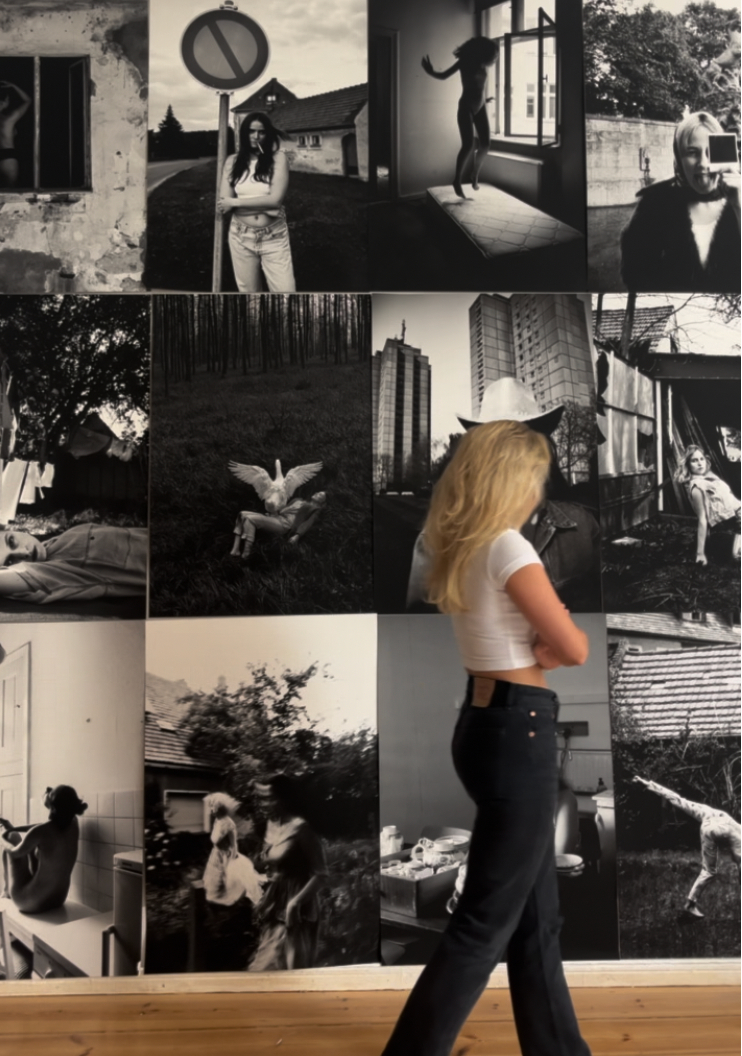
Ever since I started photographing and what began as a casual hobby slowly turned into something much more serious, something closer to identity than pastime, there have been recurring phases when I simply cannot stand my own work. Not just for a few days, but sometimes for weeks, even months. I question everything: the concept behind my images, the consistency of my style, the intention I claim to have. What once felt clear suddenly feels constructed. What once felt intuitive now feels repetitive. And the doubt creeps in quietly but persistently.
The thoughts usually follow a familiar pattern:
Are these images actually authentic, or am I just repeating something I’ve already done?
Shouldn’t I be producing “more mature” work by now? Whatever that is supposed to mean?
Isn’t black and white sometimes just an easy aesthetic choice rather than a strong one?
Why do my ideas circle around similar themes?
Can I truly photograph, or have I just convinced myself that I can?
And does it show that technical perfection is not my highest priority?
When these questions surface all at once, they don’t feel constructive. They feel destabilizing. They challenge years of self‑taught learning, of experimenting, failing, refining, building something that felt like mine.
And yet, as exhausting as these phases are, I’ve come to believe they are not destructive. They are necessary.
Why Doubt Is Healthy for Artistic Growth
The more visually educated you become, the more critical your perception grows. If you spend years looking at exhibitions, studying photo books, scrolling through curated portfolios, watching films with intention, your eye sharpens. Over time, that sharpened perception becomes stricter than your actual skill set. The American radio producer Ira Glass describes this phenomenon very clearly: in the beginning, your taste is better than what you’re capable of producing. You know what good work looks like, but you cannot yet create it consistently. That gap is uncomfortable. It makes you impatient. But it is also the exact space where development happens. And sometimes the truth is simpler than we want it to be: not every image can be strong. Some photographs are simply weak. That is part of working creatively.
If we strip away the layers, all of these thoughts come back to one central point: self‑doubt. But in creative work, self‑doubt is not automatically a sign of incompetence. More often, it is a sign of awareness. It is the recognition that your internal standard has shifted. That something is not quite aligned yet. Or perhaps that something is already forming beneath the surface, but you haven’t fully articulated it. Doubt signals that you care enough to question yourself. Indifference would be far more dangerous.
The Cycle of Creative Resources
During my research, I came across the concept of The Cycle of Creative Resources, which describes how phases of high motivation and clarity alternate with periods of frustration, uncertainty, and even creative anxiety.

I don’t experience these phases in a perfectly structured way, and they vary in intensity depending on my overall state, which is often just the sum of external influences: stress, personal circumstances, energy levels, comparison, expectations. What comforts me is not the neatness of the model, but the fact that such a cycle exists at all. It means the experience is not random. It is not uniquely mine. There is something rational about it. And sometimes rationality helps. Sometimes it is enough to say: this is a phase, not a verdict.
Other People See Your Work Differently Than You Do
Another important realization is that no one perceives your work the way you do. No one else walks around with your constant internal commentary. Other people do not see the five alternative compositions you had in mind, or the tiny technical flaw you keep obsessing over, or the version where the light could have been softer, or the detail you wish you had adjusted. They only see the final image. They do not know the mental comparisons, the invisible expectations, the imagined improvements. We are often so entangled in our own thought process that we forget how differently others encounter our work.
I experienced this very clearly when I had my images reviewed at Berlin Photo Week in my mid‑twenties. The photograph that received the strongest praise was one where the composition felt formally balanced, even small elements aligned in a way that suggested intention and control.

Another image, which I personally valued, was criticized for lacking authenticity. Interestingly, that same image later became one of the photographs I sold most frequently over the following years.

This does not invalidate professional critique, nor does it romanticize public opinion. It simply illustrates that perception is not universal. What is considered strong in one context might be questioned in another.
Moral of the Story
If there is one thing I would conclude from all of this, it is that doubt is not the enemy of creative work. It is part of it. I would even argue that every serious creative person encounters these thoughts at some point and if not, I would genuinely be curious about their secret. Thoughts are meant to be thought. Even the uncomfortable ones. Especially the uncomfortable ones. Because if you pause for a moment and look closely, you will notice that doubt does not paralyze growth, it pushes it. It forces refinement. It demands clarity. It challenges complacency.
As long as you still question your work, you are engaged with it. And that engagement, not constant confidence, is what ultimately leads to stronger images and a deeper understanding of your craft.
Best,
Maria
Kommentare