
Finding Your Way into Photography (for Beginners, Part 1)
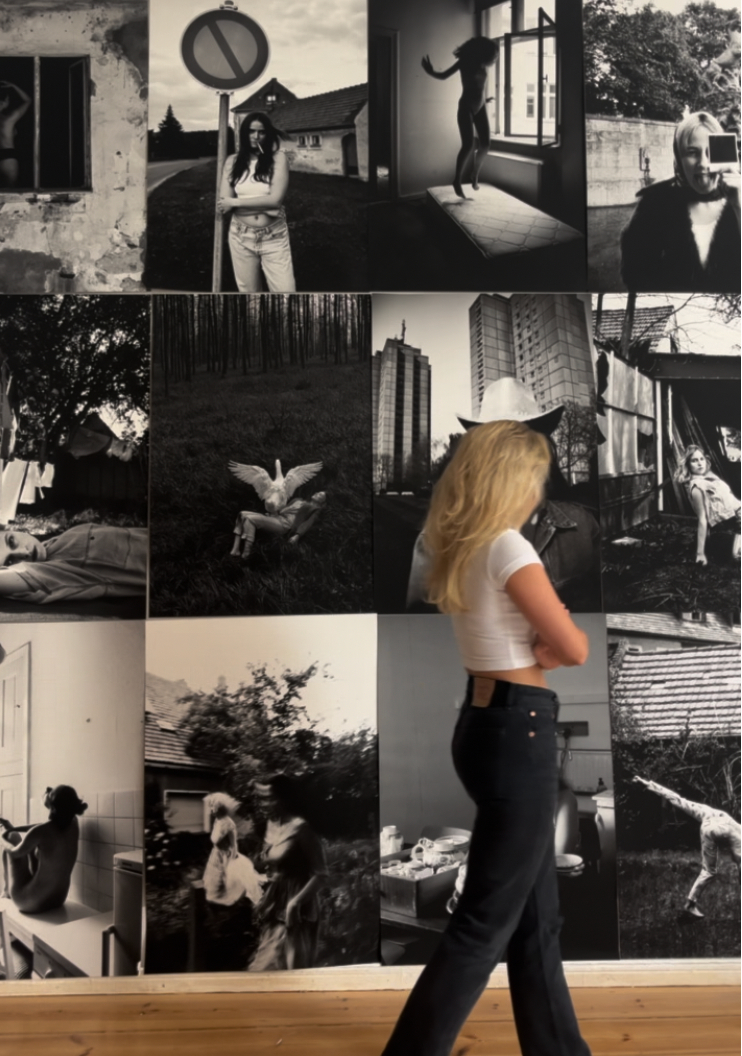
I often feel that, broadly speaking, there are two different types of photographers: the technician and the intuitive photographer. By this I don’t mean that one excludes the other, many photographers combine both approaches. But most people tend to lean naturally toward one side.
The technician is fascinated by camera settings, sensor sizes, lenses, apertures, and sharpness. The intuitive photographer, on the other hand, is more interested in atmosphere, light, situations, and emotions.
Personally, I would place myself closer to the second category. So I’d like to share what I believe you really need when starting out in photography, from the perspective of someone who approaches photography more intuitively.
1. Grab Any Camera and Go Outside
If you’re just starting out, the best advice is simple: grab a digital camera and go outside.
I started with a SONY CyberShot DSC-T77, and later used the money from my coming‑of‑age celebration to buy a Nikon D5100. Today you can often find affordable digital cameras on platforms like eBay or second‑hand marketplaces.
Source: Maria Jatzlau, Pictures from 2012
Analog photography is, of course, also an option. But in the beginning, it can be very helpful to see your results immediately. When you take a photo and can instantly review it, you quickly understand what works and what doesn’t.
So try not to spend too much time worrying about which camera to buy. At the beginning you don’t need high‑tech features. What you really need to learn first is something else entirely: how to see.
2. Photograph What Already Interests You
Most people quickly notice a certain tendency within themselves.
Some feel drawn to nature.Others are fascinated by architecture. And some, like me, are mainly interested in people. Follow that curiosity.
If you enjoy photographing nature, go out into nature. If you enjoy photographing people, go where people are.
Many beginners think they need to start with a big project. In reality, photography develops much more naturally through repetition. The more you photograph, the sooner you’ll understand what truly captures your interest.
3. The Fear of Approaching People
If you enjoy photographing people, the biggest challenge at first can be simply asking them. Beginners are often afraid of being rejected or feeling awkward.
In reality, people often react much more positively than expected. Many are actually happy to be photographed, it’s simply nice to have a good photo of yourself. Especially if you honestly explain that you’re learning photography.
If that still feels difficult, there’s a very simple alternative: photograph yourself.
Self‑portraits are one of the best exercises you can do. They teach you how to understand light, experiment with perspectives, develop patience, and get to know your camera better.
Source: Maria Jatzlau, my tryings between 2012-2023 with Nikon D51000 & Sony Cybershot
You might want to look at the work of Cindy Sherman, a well‑known photographer and filmmaker who explores gender roles and identity through self‑portraiture. She often uses her own body to play different characters and roles. For me, artists like her are always a great source of inspiration.
4. Observing Is More Important Than Photographing
In the beginning, photography is mostly about observation.
Take time for it. Sit somewhere you find interesting: a park, a street corner, a café... and simply watch.
Ask yourself:
How does the light change over time?
What kinds of shadows appear?
Which lines or shapes stand out?
What kind of story could be told here?
A small trick: take two right angles - or simply use your fingers - to create a frame.
Look through that frame at your surroundings.
This trains your brain to see fragments of reality as images, which is exactly what a camera does.
Over time, your brain will begin to connect different elements: light, movement, shapes, emotions. You will start seeing your surroundings differently.
Try doing this for seven days. Sometimes even ten minutes a day is enough.
5. Notes Are an Underrated Tool
Many beginners take photos but never write down their thoughts.
Keeping a small notebook, or using a notes app, can be incredibly helpful. Write down things like:
Ideas for future photos
Interesting locations
Special lighting situations
Questions that came up while photographing
Ideas rarely appear exactly when the camera is in your hand. Often they come before or after.
6. Keep the Technical Side Simple
If you’re working with a digital camera, don’t hesitate to start in automatic mode.
That might sound surprising, but there’s a good reason for it. If you’re trying to learn aperture, ISO, shutter speed, and composition all at once, it can quickly become overwhelming.
At the beginning, focus on understanding:
Perspective
Composition
Distance to your subject
Light
The technical settings can be learned gradually over time.
7. Perspective Changes Everything
Many beginners automatically photograph at eye level. That’s perfectly normal, but over time it can become quite boring. Try consciously experimenting with perspective:
Move closer
Step further away
Photograph from above
Photograph from below
Crouch down
Use foreground elements in your frame

Even small shifts in perspective can completely change how an image feels.
8. Consistency Matters More Than Talent
Many people believe great photographers simply have “talent.”
In reality, practice plays a much bigger role.
If you: photograph every week try new locations, regularly review your images critically and
you’ll see enormous progress within a year.
Photography is largely a process of:
observing → experimenting → discarding → learning.
Not because you suddenly gained more talent, but because your eye has been trained.
Most importantly: have fun and experiment.
Thats it for now. Go out and try it!
Best,
Maria
Kommentare